How to Calculate Soil Needed for a Raised Garden Bed
Ordering the right amount of soil saves money and extra trips. The math is straightforward: work out the volume of the bed in cubic feet, then convert it to cubic yards for bulk delivery or to a number of bags. This guide shows the formula, worked examples and the practical adjustments that the formula alone misses.
Open the raised bed soil calculator
The basic formula
For a rectangular bed:
Cubic feet = length (ft) × width (ft) × depth (ft)
Depth is usually measured in inches, so divide inches by 12 first. Then:
- Cubic yards = cubic feet ÷ 27
- Bags = cubic feet ÷ bag size in cubic feet (round up)
- Liters = cubic feet × 28.317
Bagged soil in the US is usually sold in 0.75, 1, 1.5 or 2 cubic foot bags. Check the label, because some products list quarts or liters instead.
Worked example 1: a 4 by 8 foot bed, 12 inches deep
- Depth in feet: 12 ÷ 12 = 1 ft
- Volume: 8 × 4 × 1 = 32 cubic feet
- Cubic yards: 32 ÷ 27 = about 1.19 cubic yards
- 1.5 cu ft bags: 32 ÷ 1.5 = 21.3, so 22 bags
Worked example 2: a 3 by 6 foot bed, 10 inches deep
- Depth in feet: 10 ÷ 12 = 0.833 ft
- Volume: 6 × 3 × 0.833 = 15 cubic feet
- Cubic yards: 15 ÷ 27 = about 0.56 cubic yards
- 2 cu ft bags: 15 ÷ 2 = 7.5, so 8 bags
Worked example 3: a round bed or stock tank
For a circle, use: cubic feet = 3.1416 × radius (ft) × radius (ft) × depth (ft). A 4-foot-diameter tank (2 ft radius) filled 18 inches deep holds 3.1416 × 2 × 2 × 1.5 = about 18.8 cubic feet.
Practical adjustments
Allow for settling
Fresh soil blends, especially those rich in compost, settle after watering and rain. Many gardeners order somewhat more than the exact volume or plan to top up after the first few weeks. The calculator lets you add an optional allowance; there is no single correct percentage, because settling depends on the mix.
Account for the real board height
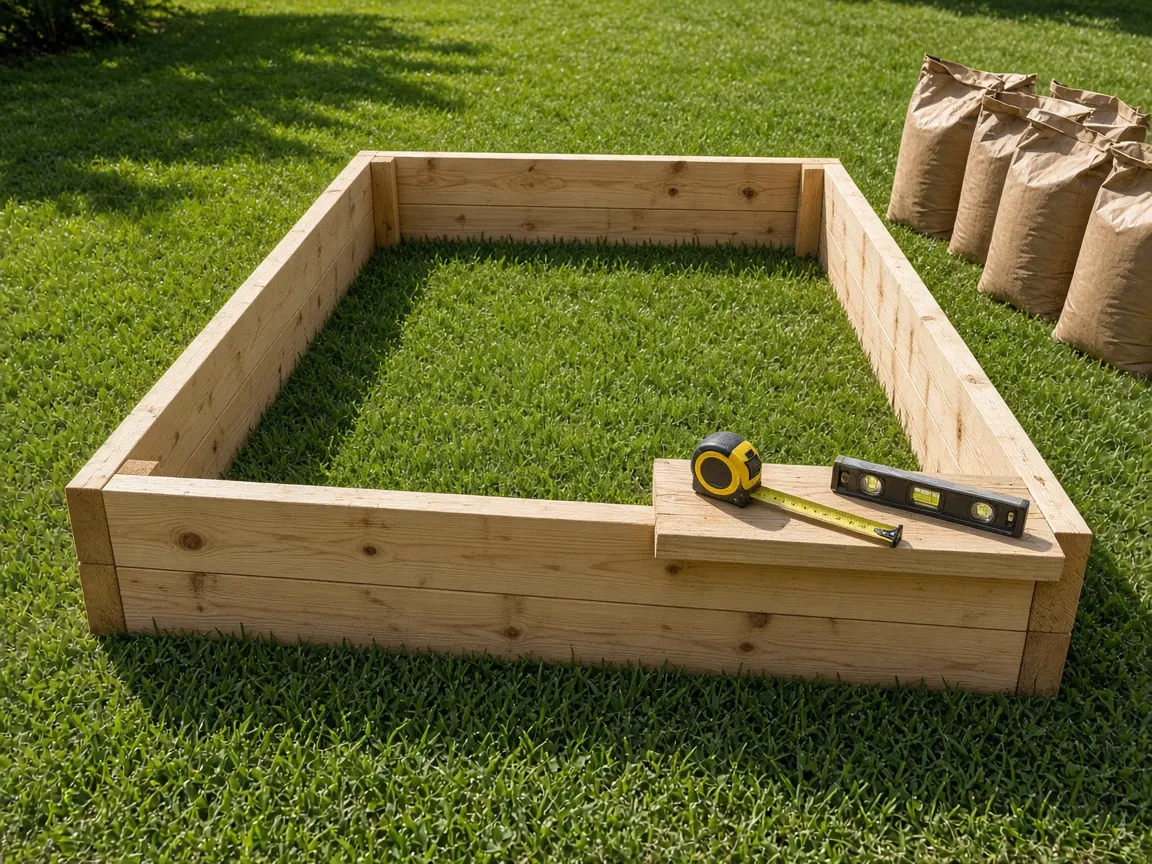
A wall of two "2x6" boards is about 11 inches tall, not 12. Measure inside the frame, and leave an inch or two below the rim so water and mulch do not wash over the edge.
Subtract what is already there
If you are topping up an existing bed, measure only the empty depth. If you are mixing in existing native soil, reduce the amount you buy accordingly.
Bulk or bags?
For larger projects, bulk soil delivered by the cubic yard is often less expensive per cubic foot than bags, but delivery fees vary. For one small bed, bags are usually simpler. Ask suppliers what their blend contains, and whether it has been screened.
What should the soil be?
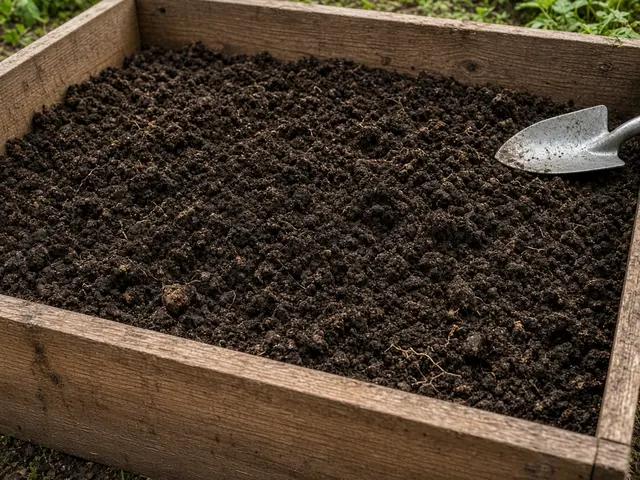
Volume is only half the question. University of Illinois Extension offers an example mix of about 40 percent topsoil, 40 percent compost and 20 percent soilless growing mix, and other Extension programs suggest similar blends. See understanding soil mixes for raised beds before you buy, and compost for raised beds for how compost fits in.
Quick conversion table (rectangular beds)
| Bed size | Depth | Cubic feet | Cubic yards |
|---|---|---|---|
| 2 × 4 ft | 12 in | 8 | 0.30 |
| 3 × 6 ft | 12 in | 18 | 0.67 |
| 4 × 4 ft | 12 in | 16 | 0.59 |
| 4 × 8 ft | 12 in | 32 | 1.19 |
| 4 × 8 ft | 18 in | 48 | 1.78 |
| 4 × 12 ft | 12 in | 48 | 1.78 |
All figures are estimates for full beds before settling. For other shapes and sizes, use the soil calculator.
Sources and further reading
- Raised Bed Checklist (PDF) - University of Illinois Extension
- Soil to Fill Raised Beds - University of Maryland Extension
- FS1328: Soil for Raised Beds - Rutgers NJAES
Gardening conditions vary by location. For recommendations specific to your area, contact your state's land-grant university Cooperative Extension office. Read our editorial policy.