Understanding Soil Mixes for Raised Bed Gardening
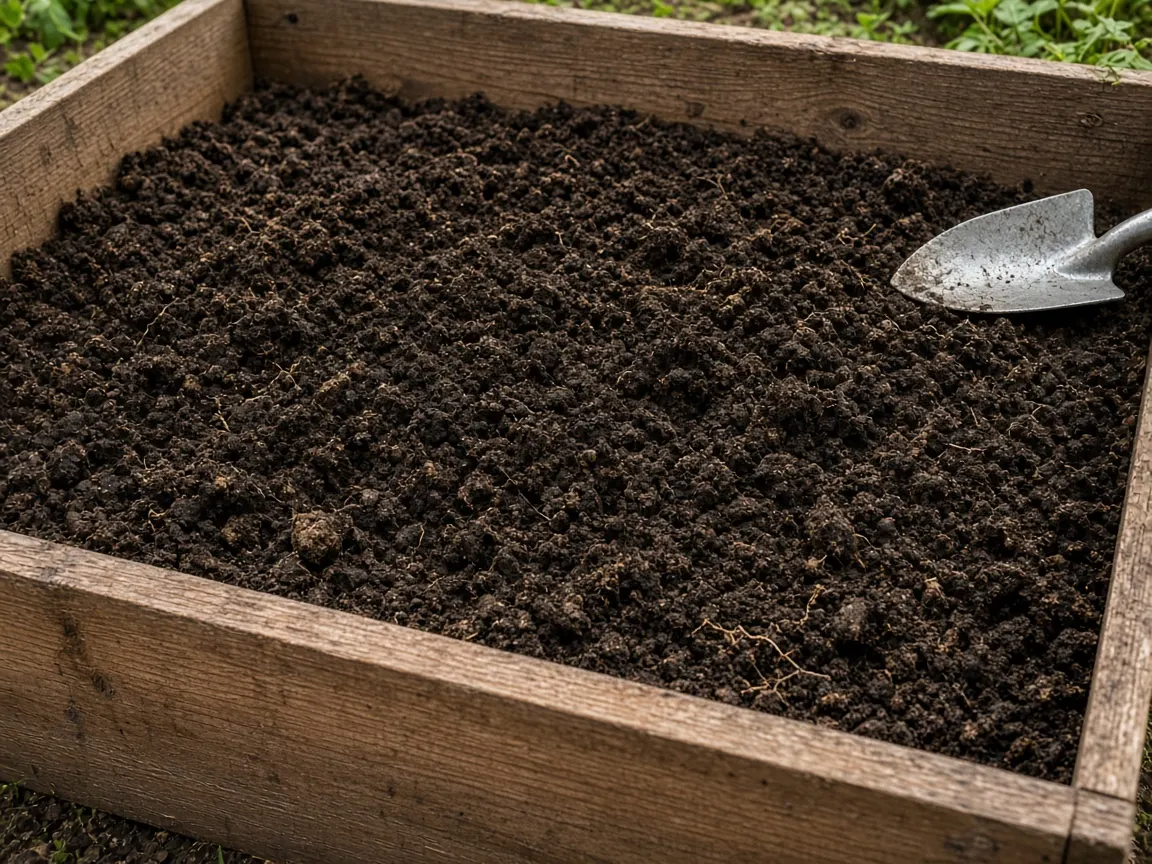
Raised bed soil needs to do two jobs that pull in opposite directions: hold enough water and nutrients for plants, and drain well enough that roots get air. Pure compost holds too much and can slump; pure sand drains too fast; dense clay fill does neither well. A good raised bed mix balances mineral soil with organic matter.
Key takeaways
- Most raised bed mixes combine topsoil (mineral soil) with compost, and sometimes a soilless mix.
- University of Illinois Extension gives an example blend of roughly 40% topsoil, 40% compost and 20% soilless mix.
- Avoid filling a framed bed with compost alone or with straight bagged potting mix.
- A soil test from a university lab tells you pH and nutrient levels so you do not guess.
The three main ingredients
Topsoil
Topsoil supplies the mineral particles (sand, silt and clay) that give soil structure and hold nutrients. Quality varies widely. Ask the supplier where it came from and whether it is screened, and look for a loose, crumbly texture without large clods, rubble or obvious weed roots. Avoid "fill dirt", which is subsoil meant for grading.
Compost
Compost adds organic matter, which improves water holding in sandy soils, loosens clay, and feeds soil organisms. It also supplies some nutrients. Compost quality varies, so look for a dark, earthy-smelling product without recognizable chunks of material. More detail is in compost for raised beds.
Soilless mix
Peat moss, coconut coir, perlite, vermiculite and fine bark lighten a mix and improve drainage and aeration. They are often used in deeper beds and elevated planters, where the bed has no contact with ground soil.
Example blends
Extension programs publish slightly different recipes, which is a reminder that there is no single perfect mix:
- University of Illinois Extension example: about 40% topsoil, 40% compost, 20% soilless growing mix.
- Rutgers NJAES (FS1328) discusses filling raised beds with imported topsoil blended with compost, and soilless options using compost and soilless mix in roughly equal parts.
- University of Maryland Extension discusses filling beds according to the site: beds over compacted or questionable soil need more imported material.
Commercial "raised bed mix" or "garden soil" products are convenient but vary. Read the label; some are mostly composted bark.
What not to do
- Do not fill a bed only with compost. It can be very high in nutrients and salts, shrinks substantially as it decomposes, and may hold too much water.
- Do not fill a large bed only with bagged potting mix. It is designed for containers, is expensive at this scale, and its peat or bark breaks down over time.
- Do not add a layer of gravel at the bottom for drainage. A layer of coarse material under finer soil can actually hold water in the soil above it.
- Do not use soil from an unknown source if contamination is possible.
Testing your soil
A laboratory soil test is inexpensive through most state land-grant university labs and reports pH, major nutrients and organic matter, often with fertilizer recommendations for vegetables. Oregon State University and University of Illinois Extension both publish clear instructions. In short:
- Take several small samples from the top 6 to 8 inches of the bed.
- Mix them in a clean plastic bucket and remove roots and stones.
- Let the soil air-dry, then send the requested amount to the lab with its form.
Test a new bed before planting if you can, and every few years afterwards. Many vegetables grow best in slightly acidic to near-neutral soil, roughly pH 6.0 to 7.0, but follow the lab's crop-specific recommendations.
Keeping soil healthy year after year
Raised bed soil settles and organic matter breaks down. Add a layer of compost each year (see how much compost to add), mulch the surface during the growing season (mulch guide), and avoid walking on the bed.
Planning a new bed? Estimate the volume with the soil calculator.
Sources and further reading
- Raised Bed Checklist (PDF) - University of Illinois Extension
- Soil to Fill Raised Beds - University of Maryland Extension
- FS1328: Soil for Raised Beds - Rutgers NJAES
- Growing Vegetables in Raised Beds - University of Maryland Extension
- How Do I Test My Garden Soil? (EM 9685) - Oregon State University Extension
- Collecting Soil Samples - University of Illinois Extension
Gardening conditions vary by location. For recommendations specific to your area, contact your state's land-grant university Cooperative Extension office. Read our editorial policy.