Understanding Regional Seed-Starting Calendars
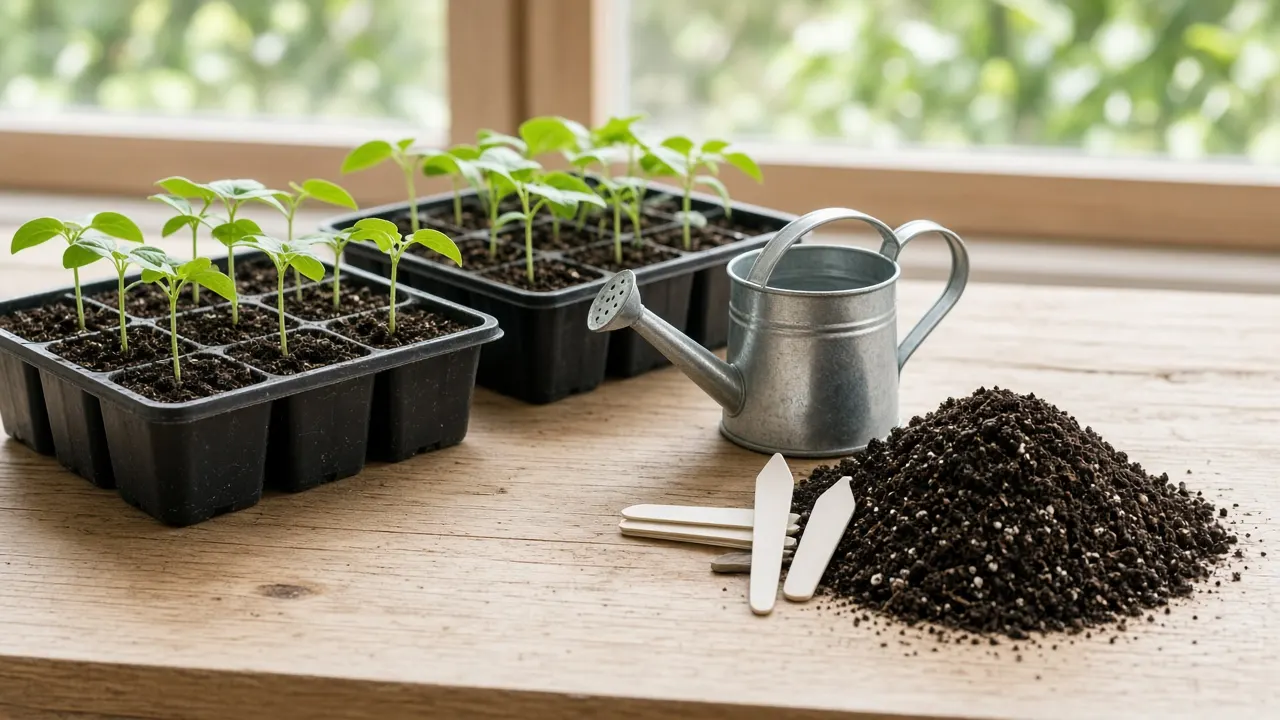
A seed-starting calendar is a schedule that tells you when to sow each crop indoors or outdoors. The catch is that a calendar is only accurate for the climate it was written for. A chart made for Georgia will have Ohio gardeners sowing tomatoes far too early. This guide explains how calendars work so you can read any of them correctly, or build your own.
Why one calendar cannot fit the whole country
Average last spring frost dates in the contiguous United States range from winter in parts of Florida, south Texas and coastal California to late spring or even early summer in northern and high-elevation areas. Some places in Hawaii and South Florida rarely see frost at all. A calendar keyed to fixed calendar dates only works within a fairly small climate area.
That is why the best calendars are published by state Cooperative Extension programs, often with separate columns for different regions within a state. Find yours through the Extension directory.
The anchor: your frost dates
Most calendars are built around two dates:
- Average last spring frost: the date after which frost becomes unlikely in spring.
- Average first fall frost: the date when frost becomes likely again in fall.
"Average" matters. These dates come from historical temperature records, and frost can still happen after the average last frost. Many calendars and climate tools express the risk as a probability, for example a date with a 50% or 10% chance of a later frost. Gardeners who want less risk plant tender crops a week or two after the average date. NOAA's U.S. Climate Normals are the underlying data for many such estimates.
Reading relative timing
Seed packets and many calendars express timing relative to frost, for example:
- "Start indoors 6 to 8 weeks before last frost" (common for tomatoes).
- "Direct sow 2 to 4 weeks before last frost" (common for peas and spinach).
- "Sow outdoors after danger of frost when soil is warm" (beans, squash, cucumbers).
Relative timing travels well: it works anywhere once you plug in your own frost date.
Build your own schedule in four steps
- Look up your average last spring frost date from your state Extension service or a local climate source.
- List the crops you want and the "weeks before or after frost" from each seed packet.
- Count backward or forward from the frost date and write the actual dates.
- Note soil temperature needs. Some crops, such as beans and squash, fail in cold soil even if air frost has passed.
Example: the same crops in three climates
The following example uses hypothetical frost dates purely to show the arithmetic. It is not a recommendation for any specific place; check your own local date.
| Crop and packet timing | Last frost March 1 | Last frost April 15 | Last frost May 20 |
|---|---|---|---|
| Peppers: start indoors 8–10 weeks before | Late Dec–early Jan | Early–mid Feb | Mid–late Mar |
| Tomatoes: start indoors 6–8 weeks before | Early–mid Jan | Late Feb–early Mar | Late Mar–early Apr |
| Peas: direct sow 4 weeks before | Early Feb | Mid Mar | Late Apr |
| Beans: direct sow 1–2 weeks after, warm soil | Mid Mar | Late Apr | Early Jun |
Fall calendars
For fall crops, count backward from your average first fall frost using days to maturity, then add a margin because growth slows as days shorten. See cool-season vegetables for the method.
Where hardiness zones fit
Many seed companies print USDA hardiness zone maps on packets. Zones are based on average annual extreme minimum winter temperature and are useful for perennials. Two towns in the same zone can have quite different frost dates and season lengths. Use frost dates for vegetable timing; read USDA hardiness zones explained for the details.
Keep your own record
Your yard has its own microclimate. Note when you planted, when the last frost actually happened and how crops performed. After a few seasons your own notes become your most accurate calendar.
Ready to sow? Continue with starting vegetable seeds indoors.
Sources and further reading
- Find Cooperative Extension in Your State - Extension Foundation
- U.S. Climate Normals - NOAA National Centers for Environmental Information
- Starting Seeds Indoors - University of Maryland Extension
- USDA Plant Hardiness Zone Map - USDA Agricultural Research Service
Gardening conditions vary by location. For recommendations specific to your area, contact your state's land-grant university Cooperative Extension office. Read our editorial policy.