How to Choose the Best Location for a Raised Garden Bed
Where you put a raised bed matters more than what you build it from. A beautifully built bed in half shade will grow mediocre tomatoes, while a simple frame in full sun near a hose spigot can be very productive. Here is how to evaluate a spot before you buy any lumber.
Key takeaways
- Fruiting crops such as tomatoes, peppers and squash need roughly 6 to 8 hours of direct sun; leafy greens can manage with less.
- Choose level, well-drained ground away from tree roots.
- Put the bed where you can reach it with water easily and see it often.
- Orient beds for tall crops so they do not shade shorter plants.
1. Map your sunlight
Pick a clear day and check the spot every two hours from morning to evening. Note when it is in direct sun and when it is shaded. Shade patterns shift through the year: in spring and fall the sun is lower in the sky, so buildings and trees cast longer shadows than in midsummer.
Extension guidance for vegetables commonly cites 6 to 8 hours of direct sun for warm-season fruiting crops, and around 3 to 5 hours as workable for cool-season leafy crops such as lettuce and spinach. If your best spot only gets morning sun, plan on greens, herbs and peas rather than tomatoes.
In the hottest parts of the South and Southwest, a bed that receives some afternoon shade in midsummer can actually help heat-sensitive crops, but the bed should still get strong morning sun.
2. Check drainage
After a heavy rain, look for puddles that linger for more than a day. Raised beds improve drainage within the bed, but setting one in a low spot where water collects will still leave the bottom of the bed wet. If your only sunny area drains poorly, a deeper bed helps keep roots above the wettest zone.
3. Keep away from tree roots
Large trees compete for water and nutrients, and their roots will happily grow up into a bed of rich soil. They also cast shade that increases as they grow. Leave as much distance as your yard allows from established trees and large shrubs.
4. Make watering easy
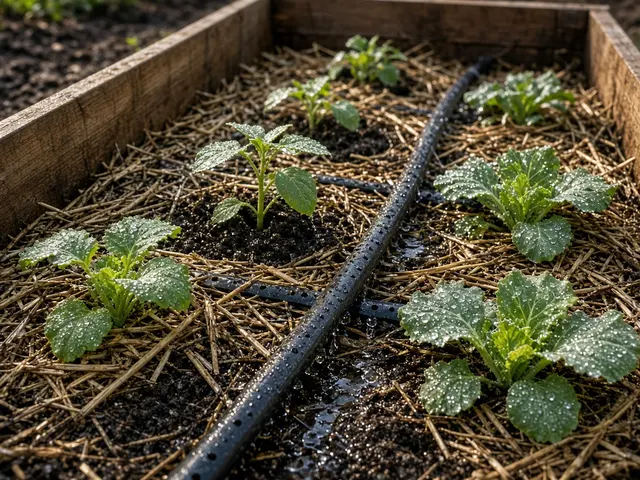
Raised beds dry out faster than ground-level soil, especially in summer. A bed within reach of a hose is much more likely to be watered consistently. If you plan to use drip irrigation, check the distance to the spigot and whether you will need a timer. Our guide to watering raised beds explains why consistency matters.
5. Choose level ground
A bed on a slope will drain unevenly and the frame will be under uneven pressure. Small slopes can be leveled by digging the uphill side in slightly. On steeper ground, consider terracing or shorter beds placed along the contour.
6. Think about soil safety
If the bed will sit near an older house, a busy road or a former industrial site, the existing ground soil may contain contaminants such as lead from old paint or past use. In those situations Extension sources generally recommend testing the native soil and, if in doubt, building a deeper bed filled with imported soil, sometimes with a barrier underneath. Your state's university soil testing lab can advise on lead testing.
7. Plan for access and visibility
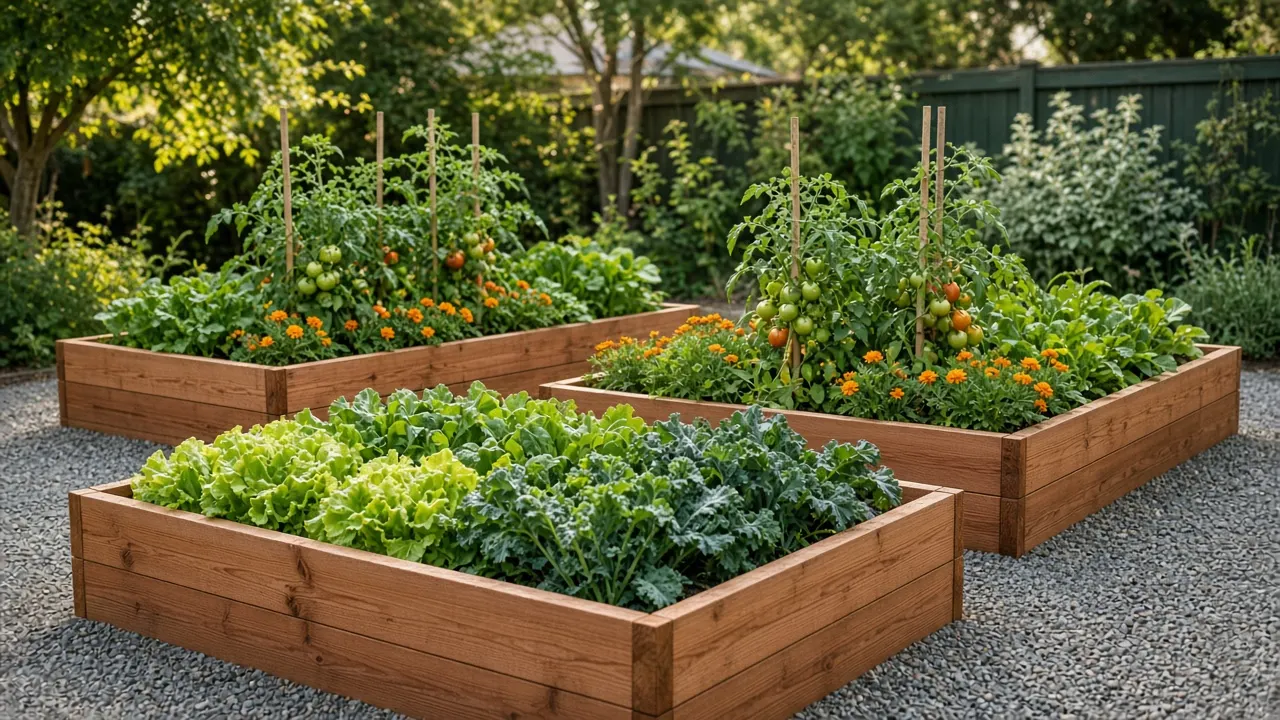
You will visit the bed more often if you can see it from a window or pass it on your way to the car. Leave room on all sides for paths. Around 18 inches is a practical minimum; about 3 feet accommodates a wheelbarrow or a wheelchair. See raised bed dimensions for more.
8. Orientation
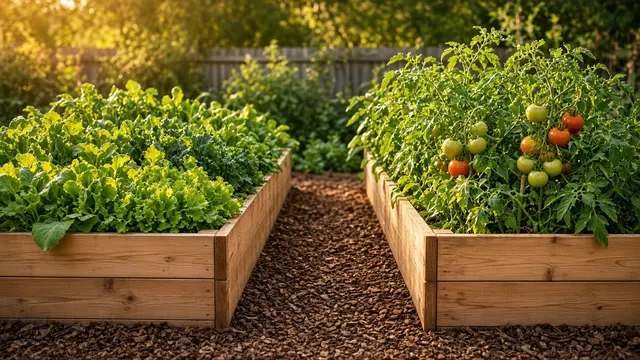
For beds of mostly low-growing crops, a north-south long axis lets sun reach both sides of the bed. When the bed will hold tall crops such as caged tomatoes or pole beans, many gardeners orient it east-west and plant the tall crops along the north side so they do not shade shorter plants. Either way, sun hours matter more than the exact compass direction.
Small-space and rental options
No suitable ground? Containers, fabric grow bags and raised beds on legs work on patios, balconies and driveways if they receive enough sun. Check that a balcony can bear the weight of wet soil before you fill a large planter. Our container gardening guide covers small-space setups.
Site selection checklist
- At least 6 hours of direct sun for fruiting crops
- No standing water after rain
- Away from large tree roots
- Within hose reach
- Level or easily leveled
- Room for paths on all sides
- Native soil tested if contamination is possible
Once you have a site, continue with the beginner's guide to raised beds.
Sources and further reading
- Growing Vegetables in Raised Beds - University of Maryland Extension
- Building Raised Beds - UF/IFAS Gardening Solutions
- Growing Vegetables in Containers - University of Wisconsin-Madison Extension
- Starting Raised Beds - UConn Home & Garden Education Center
Gardening conditions vary by location. For recommendations specific to your area, contact your state's land-grant university Cooperative Extension office. Read our editorial policy.