Container Gardening for Patios and Small Spaces
You do not need a yard to grow vegetables. A sunny patio, balcony, porch or driveway can support a surprising range of crops in containers. Success depends on choosing the right container size, using a real potting mix, and keeping up with watering, which is the biggest job in container gardening.
Key takeaways
- Fruiting crops need about 6 or more hours of direct sun; leafy greens can manage with less.
- University of Wisconsin-Madison Extension suggests at least 2 gallons for small crops and at least 5 gallons for larger ones such as tomatoes and peppers.
- Use potting mix, not garden soil, and make sure every container drains.
- Containers can need water daily in hot weather.
Check your light first
Watch your space across a day. South- and west-facing spots in the continental US are usually sunniest. If you get only morning sun, focus on lettuce, spinach, chard, herbs and peas. If you get six or more hours, tomatoes, peppers, beans and squash become realistic.
Hard surfaces such as concrete, brick and metal railings reflect and store heat. That can help in spring but stress plants in midsummer.
Container sizes by crop
| Crop type | Examples | Suggested minimum |
|---|---|---|
| Small | Leaf lettuce, spinach, radishes, green onions, many herbs | About 2 gallons, 4 to 6 inches deep |
| Large | Tomatoes, peppers, eggplant, bush beans, cucumbers, broccoli | About 5 gallons, 12 to 18 inches deep |
| Very large | Summer squash, larger tomato varieties | Larger containers help; many gardeners use 10 gallons or more |
Sizes above are based on University of Wisconsin-Madison Extension guidance. Bigger containers hold more water and are more forgiving. Look for compact, dwarf, bush or "patio" varieties described on seed packets and plant tags.
Choosing containers
- Drainage is essential. Add holes if needed. Raise pots slightly on feet or bricks so water can escape.
- Skip the gravel layer. Extension sources note that gravel at the bottom does not improve drainage and can keep the mix above it wetter.
- Materials: plastic and glazed pots hold moisture longer; terracotta dries faster; fabric grow bags breathe and are light; wooden boxes look good but eventually rot.
- Color: dark containers in full sun can heat roots.
- Weight: wet potting mix is heavy. Check balcony weight limits with your building before placing large containers.
Potting mix
Use a quality soilless potting mix designed for containers. Garden soil compacts in pots and drains poorly. Some gardeners add compost to potting mix; keep it to a modest share so the mix stays light.
Watering
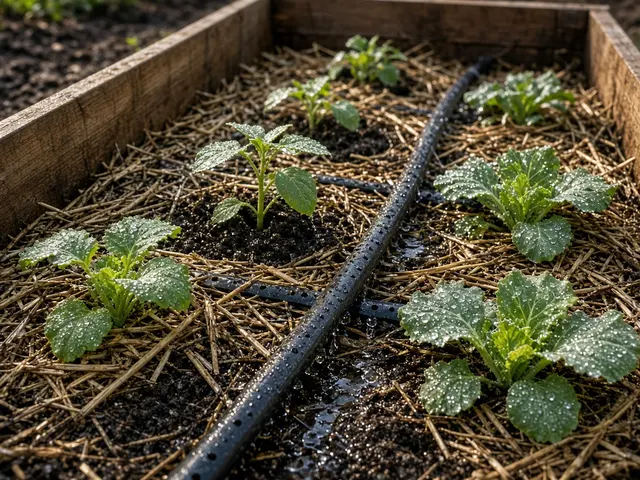
Containers dry out fastest of any growing method. Oregon State University Extension advises watering when the top of the soil feels dry, continuing until water runs from the drainage holes, and notes daily watering is often needed on sunny patios. In heat waves, large plants in small pots may need water twice a day. Self-watering containers and drip systems with a timer help if you travel.
Mulching the top of large containers with straw or compost also slows drying. See watering guide for signs of under- and over-watering.
Feeding
Frequent watering washes nutrients out of potting mix, so container vegetables usually need regular feeding. Follow the label of a balanced fertilizer suitable for vegetables, or use a slow-release product mixed in at planting.
Supporting plants
Use cages or stakes for tomatoes, and train cucumbers or pole beans up a railing or trellis to save floor space.
A starter balcony plan
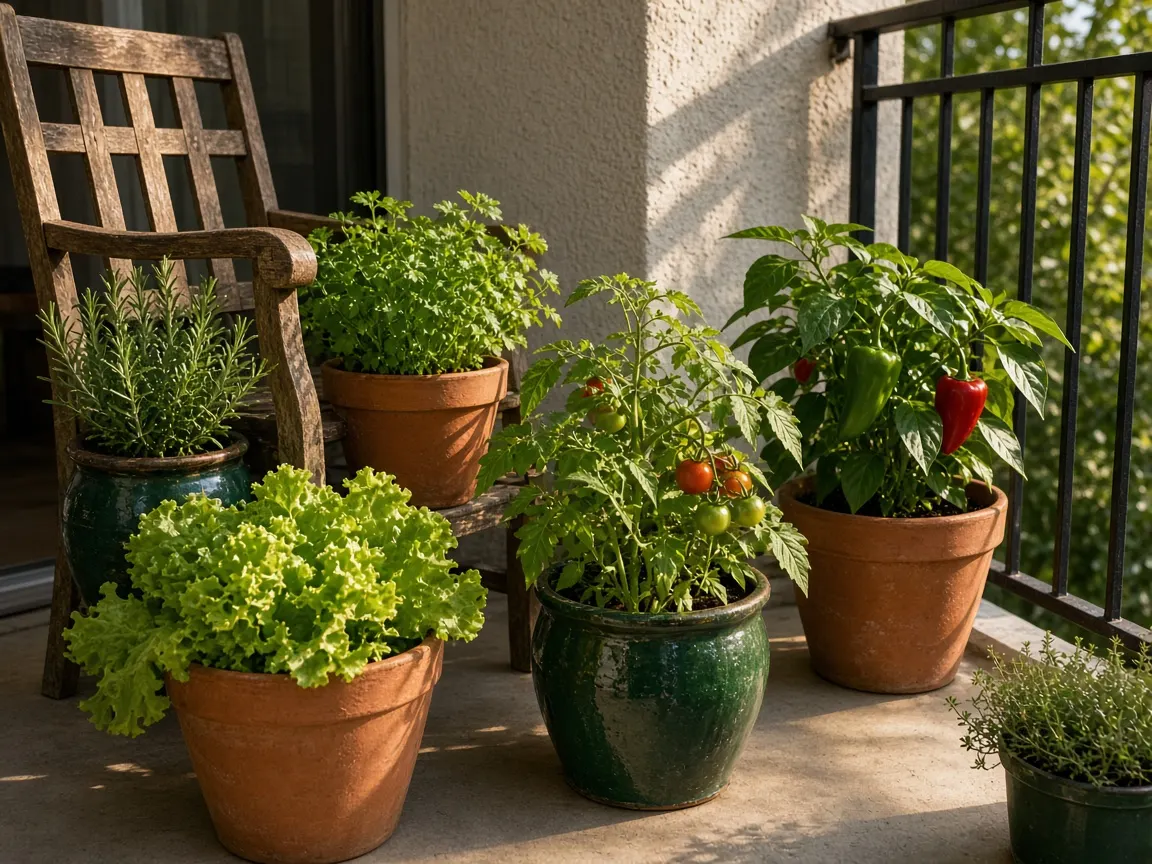
- One 5-gallon container with a compact cherry tomato.
- One 5-gallon container with a pepper plant.
- A long window box of leaf lettuce, sown in batches.
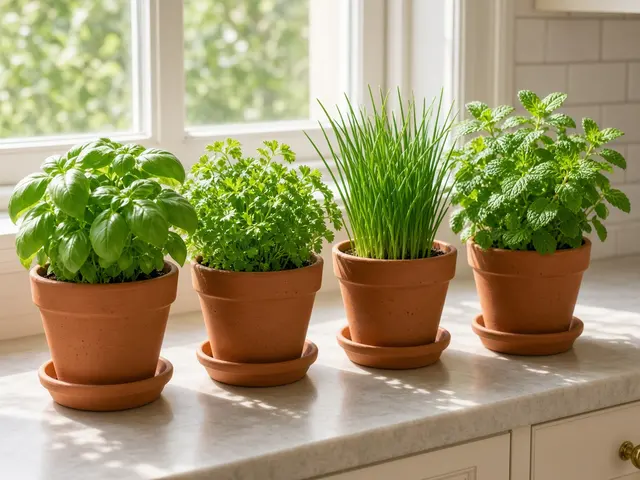
- Several small pots of basil, parsley and chives.
Bringing plants indoors
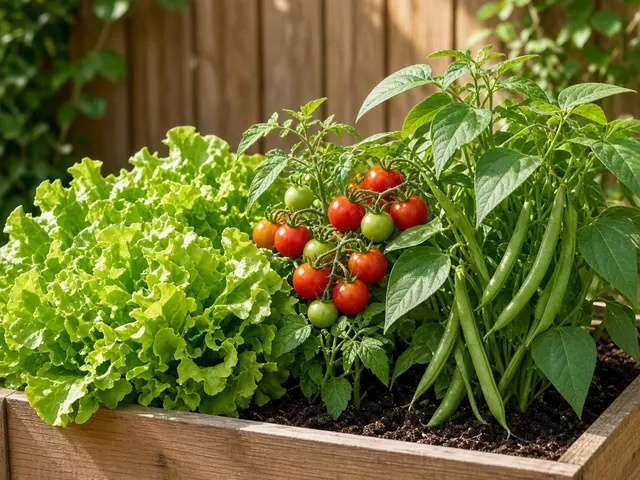
Many herbs can move inside for winter. See growing herbs indoors. If you later gain some yard space, raised beds are a natural next step.
Sources and further reading
- Growing Vegetables in Containers - University of Wisconsin-Madison Extension
- Container Gardening: Grow Vegetables Even Without Yard Space - Oregon State University Extension
- Growing Herbs in Containers and Indoors - University of Maryland Extension
Gardening conditions vary by location. For recommendations specific to your area, contact your state's land-grant university Cooperative Extension office. Read our editorial policy.